
History
The Institute of Theoretical and Applied Informatics of the Polish Academy of Sciences (IITiS PAS) is the continuation of the Complex Automation Systems Department of the Polish Academy of Sciences (ZSAK PAS). The Department was established in 1966 under the leadership of Professor Stefan Węgrzyn as an external unit of the Warsaw-based Institute of Automation of the Polish Academy of Sciences. In 1969, the Department became part of the Centre for Scientific Research of the Polish Academy of Sciences in the Katowice Voivodeship, headquartered in Zabrze, which had been established a year earlier. After the Centre was dissolved in 1975, its units, including ZSAK PAS, continued their activity as scientific institutions of the Polish Academy of Sciences.
The Department’s first headquarters was a room of approximately 20 square meters located within the Chair of Control Theory at the Silesian University of Technology, headed by Professor Stefan Węgrzyn, at 10 Katowicka Street in Gliwice (now the Faculty of Electrical Engineering of the Silesian University of Technology at 10 Akademicka Street).
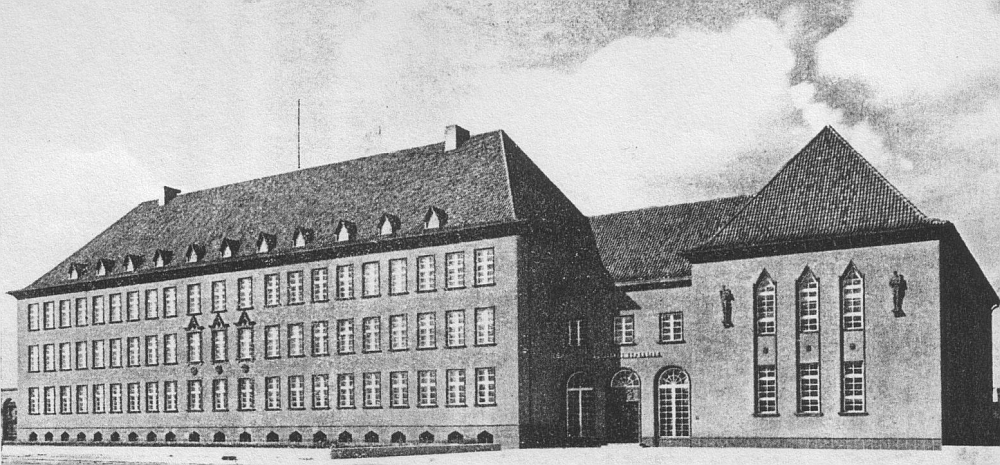
In mid-1970, ZSAK PAS moved from the Silesian University of Technology to part of the premises on the third floor of the building at 21 Zwycięstwa Street in Gliwice, which is now the seat of the Gliwice City Hall. Within this modest space, a room was set aside for the installation of what was then a modern Odra 1204 computer equipped with an Algol-60 compiler. The staff also had access to a dedicated language for the simulation of dynamic systems, as well as a library of algorithms written in Algol-60.
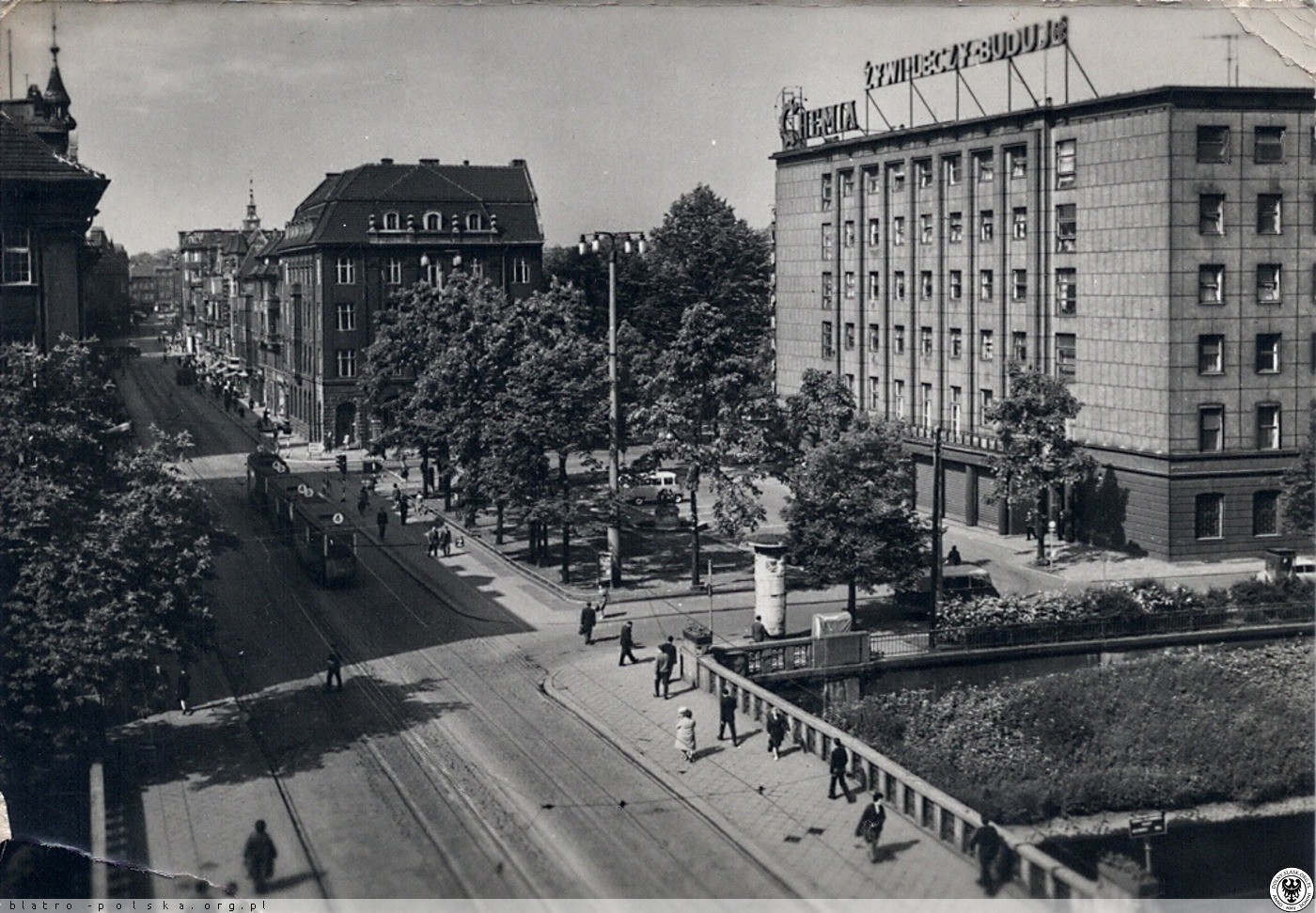
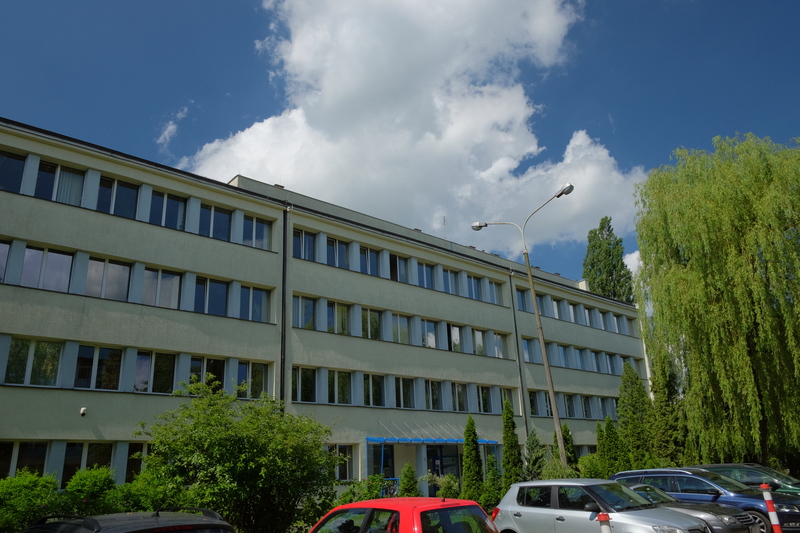
In 1972, the Polish Academy of Sciences purchased plots of land on Bałtycka Street in Gliwice for a shared building to house the Complex Automation Systems Department of the Polish Academy of Sciences and the Department of Chemical Engineering and Apparatus Design of the Polish Academy of Sciences. In September 1977, the Institute’s current headquarters were officially opened. The building included an air-conditioned room intended for the computer laboratory, two laboratory rooms, and three times more office space for staff than at the previous location.
Since 1966, the Department had conducted theoretical research on, among other things, the application of stochastic approximation methods to the development of object models and the modelling of direct digital control systems using the Odra 1003 computer. The properties of objects and complex systems were identified, and research was carried out on the theory of control algorithms, the theory of control optimization, and the structure of systems.
In 1970, ZSAK PAS served as the coordinator of Key Problem 06.1.2 entitled “Complex Automation Systems.” The implementation of this key problem involved the selection of representative technological nodes for which appropriate mathematical models were to be developed and identified, and then used for the synthesis of computer control algorithms.
The results laid the groundwork for the next edition of key problems carried out in the years 1976–1980. ZSAK PAS once again acted as the coordinator of research under Key Problem 06.4, “Integrated Computer Control Systems for Production Processes.” At the same time, research and development work included the design support systems and the implementation of microprocessor systems. One outcome of this work was the development and patenting in 1977 of circuit-level microprocessor emulation as the principal part of the prototype RTDS-8 (Real-Time Development System), which entered production in 1981. This was followed by the design of the ComPAN-8 microcomputer, whose production began in 1984.
In 1986, ZSAK PAS became the principal contractor for the Central Research and Development Programme CPBR 8.6, “Microcomputer Systems Supporting Creative Work,” under the auspices of the Polish Academy of Sciences. Research conducted there concerned advisory systems, support for the design and construction of digital systems, and the development of tool packages supporting research and education. Among the systems created at the Department were the AMOK queueing model analyzer for the modelling and efficiency assessment of computer system networks, subsequent RTDS-8/16 emulators, and the ComPAN-P microcomputer with a reconfigurable architecture, useful in the development of distributed control systems.
The Department’s achievements led to its transformation into the Institute of Theoretical and Applied Informatics of the Polish Academy of Sciences by Resolution No. 2/89 of the Presidium of the Polish Academy of Sciences of 17 January 1989. Professor Stefan Węgrzyn had headed the Department from the beginning of its existence, supervised the above-mentioned key problems, and then served continuously as Director of the Institute until 2002, followed by the position of Scientific Director from 2003 to 2006.
In April 1996, the Central Commission for Academic Titles and Degrees granted the Institute the authority to confer the academic degree of Doctor of Technical Sciences in the discipline of computer science.
In 1997, the Institute participated for the first time in the implementation of the three-year European CRIT-2 project under the ESPRIT programme (the Fourth Framework Programme), entitled “Image Processing Algorithms for Computer Aided Toolmark Identification.” In 2007, a consortium of three partners — the Institute of Theoretical and Applied Informatics of the Polish Academy of Sciences, the University of Bielsko-Biała, and the Silesian University of Technology — associated within the Silesian Centre for Advanced Technologies, obtained funding to create an environmental laboratory for systems of visual exploration of three-dimensional space. The completion of this project and the opening of the 3D Space Exploration Laboratory took place in mid-2008. In the years 2018–2021, the Institute served for the first time as the coordinator of a European project: SerIoT – Secure and Safe Internet of Things, implemented במסגרת the Horizon 2020 programme by a consortium of 15 institutions from 8 European countries.
Książka autorstwa Pani Haliny Węgrzyn Stefan Węgrzyn - historia życia.